Wastewater Treatment Ordinance to be applied in a Municipality

A solution for municipalities with low infrastructure budgets

In small towns, which are facing a great growth in real estate and development, and which are not prepared in infrastructure or funds, there are many projects that are being approved by the municipalities, which have very old regulations or, simply, based on uses and customs. Examples of these localities here in Mexico are Bacalar, Tulum, Puerto Escondido, among many others.

It is very important, for this reason, to have a good regulation in force that requires certain parameters for the discharge of wastewater used, which guarantees the quality of the water in the short and long term.

To reduce the environmental impact produced by wastewater from buildings that are developed outside the reach of the public sewer system, it is recommended that a municipal ordinance be established, which must be complied with in order for construction permits to be approved. This ordinance, among other things, establishes discharge parameters that must be met by the wastewater produced so as not to have an impact on the environment, regardless of the treatment technology used.

This Ordinance differentiates the type of discharge of this water (infiltration into the ground and direct discharge to water bodies) and also differentiates between single-family homes and commercial properties. This Ordinance also includes a Technical Manual with general and detailed information on the treatment systems described, which could be accompanied by training courses for professionals, builders and the general public.

The data in this article were taken from the ordinance of a municipality in Argentina (Colón, Entre Ríos).

What does a Wastewater Ordinance include?

This Ordinance consists of 3 parts:

  • The Ordinance
  • Technical Annex
  • Technical Manual
 
The Ordinance

In this first document, the conditions to be fulfilled, to whom it is addressed, penalties and more legally matters are discussed.

Within this, we can find for example, in Article 4, where it states that, translated to en says “…all liquid effluent generators in the terms set forth in the third article (Art. 3º) must submit to the enforcement body of this Ordinance, application for approval of construction plans, before starting the same”. Article 9 of the Ordinance also refers to the penalties established for any infringement or non-compliance with the articles presented in the Regulations.


Technical Annex

Then, in the Technical Annex, some discharge parameters are required with respect to the wastewater from the buildings.

In this, the discharge parameters are differentiated for situations with tertiary infiltration system, or with direct discharge.

If it is a system that ends up infiltrating the water into the ground, either by means of an absorption well or an infiltration trench, the maximum parameters established are achievable by well-designed primary treatment systems. These parameters are listed in Table N°1 of this Technical Annex.

Article 4 of this technical annex defines primary systems as (Transl. EN) “…those that work in the absence of oxygen, where anaerobic bacteria predominate, and therefore cannot be ventilated to the outside. It may be materialized with septic tanks of 2 to 3 compartments built in situ or pre-molded, with commercial digesters or any other technology that guarantees the anaerobic treatment of the effluent”.

In the case of direct discharge, these waters must comply with other discharge parameters, established in Table N°2.

To achieve these values, a Secondary System is necessary, which is defined in Article 5 as “…one that works with the presence of oxygen, where facultative and aerobic bacteria predominate, so it must ensure the entry of oxygen to the system, either through marsh vegetation or in a forced way. It may be materialized with subsurface flow wetlands or any other technology that guarantees facultative-aerobic treatment of the effluent.”

Table N°1 and N°2 of the Technical Annex establishing the parameters for wastewater discharge to be returned to the natural cycle

Technical Manual

In order for designers to achieve these parameters, a Technical Manual is attached to this Ordinance with general and detailed information on the treatment systems described, which shall be associated with training courses aimed at professionals, builders and the general public.

In this technical manual, primary treatment solutions are proposed, such as septic tanks, commercial biodigesters, etc. The design aspects of these solutions are described in detail. Secondary treatment solutions are also presented, such as subsurface and surface flow artificial wetlands, among other aspects necessary for their sizing. In addition, technical aspects of design of tertiary infiltration systems can be found.

For Example, Mexican National Wastewater Treatment Regulations – NOM-001 SEMARNAT

In Mexico, there are already regulations that require wastewater discharge parameters, such as NOM-001 of SEMARNAT (renewed in 2021).

The problem with these regulations is the way they are enforced. The agencies in charge of this, such as CONANP (National Commission of Natural Protected Areas), do not have an adequate budget to test compliance with these regulations.

For this reason, the option of creating a municipal ordinance that must be complied with in order for construction permits to be accepted in each municipality is very interesting. Solving the problem at a local level.

Other examples of regulations that aren’t being respected can be the decrete in a stae level, Decrete 847/16, Cordoba Argentina. 

Discharge parameters established by SEMARNAT’s NOM 001 for direct discharge

We give away the Ordinance and the Technical Annex for you to have as an example.

Enter your Email to receive the Ordinance and Technical Annex of Colón, Entre Ríos, Argentina, in which we participated in its development.

If you want you can adapt it to your municipality and present it to the authorities as a possible solution to wastewater problems.

Septic Tanks

Primary System

BioFilter

Secondary System

Inspection chamber

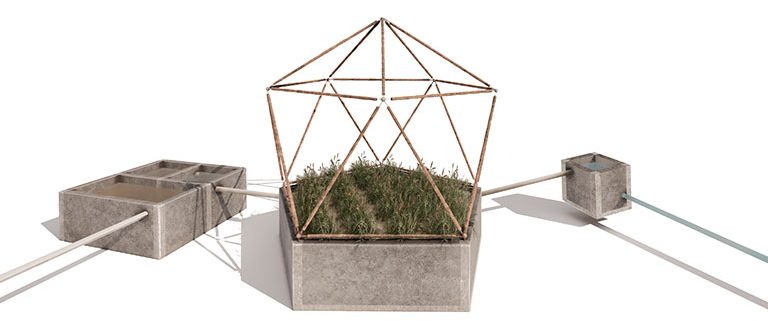
Scheme of operation of a Biofilter with primary pretreatment

Who we are?

We are THE WAVE ORG L.L.C. a new company in Mexico, with the objective of scaling and making visible a way to clean the waters. Which is the most efficient, economical and intuitive way. A technique applied by our family for more than 15 years, not only at domestic scale, but also at urban and industrial scales.

Today only 4% of Mexican wastewater is treated correctly, as established in the NOM-001 of SEMARNAT (Ministry of Environment and Natural Resources).

Our goal is to treat water correctly before returning it to its natural cycle.

That we stop returning them contaminated, thus impacting the cycle as a whole.

This is a problem on a social scale. That is why we focus on making people aware of the problem, which involves all of us from our main element, water.

Meet our team.

Ordenanza Tratamiento de Aguas Residuales para aplicar en un Municipio

Una solución para municipios con bajo presupuesto en infraestructura

En pequeñas localidades, que se ven enfrentadas a un gran crecimiento inmobiliario y de desarrollo, y que no están preparados en  infraestructura ni en presupuesto, hay muchos proyectos que están siendo aprobados por los municipios, los cuales cuentan con normativas muy antiguas o, simplemente, basadas en usos y costumbres. Ejemplo de estas localidades aquí en México, pueden ser Bacalar, Tulum, Puerto Escondido, entre muchas otras.

Es muy importante, por este motivo, tener una buena normativa vigente que exija ciertos parámetros de vuelco de las aguas residuales utilizadas, que garantice la calidad de las aguas a corto y largo plazo.

Para reducir el impacto ambiental producido por las aguas residuales de los inmuebles que se desarrollan fuera del alcance de la red de alcantarillado público, se recomienda establecer una Ordenanza municipal, que deba de ser cumplida para que se aprueben los permisos de construcción. Esta Ordenanza, entre otras cosas, establece parámetros de vuelco que deben tener las aguas residuales producidas para no generar un impacto en el ambiente, independientemente de la tecnología de tratamiento que se utilice. 

Esta Ordenanza, diferencia el tipo de vuelco de estas aguas (infiltración en el terreno y vuelco directo) y diferencia también si se trata de viviendas unifamiliares e inmuebles con fines comerciales. Con esta Ordenanza, viene anexado también un Manual técnico, con información general y detallada de los sistemas de tratamiento descritos que irá asociada con cursos de capacitación dirigidos a profesionales, constructores y al público en general.

Los datos de este artículo se sacaron de la ordenanza de un municipio de Argentina (Colón, Entre Ríos).

En que consiste una Ordenanza de Aguas Residuales

Esta Ordenanza consta de 3 partes:

  • La Ordenanza
  • Anexo Técnico
  • Manual Técnico


La Ordenanza

En este primer escrito, se habla legalmente de las condiciones a cumplir, a quienes va dirigido, sanciones y más.

Dentro de esta, podemos encontrar por ejemplo, en el artículo 4, donde declara que “…todo generador de efluentes líquidos en los términos expuestos en el artículo tercero (Art. 3º) deberá presentar ante el órgano de aplicación de la presente Ordenanza, solicitud de aprobación de planos de obra, antes de comenzar la misma”. Esta habla también, en el artículo 9, de las sanciones establecidas a toda infracción o incumplimiento de los artículos presentados en la Normativa.


Anexo Técnico

Luego, en el Anexo Técnico, se exigen unos parámetros de vuelco respecto a las aguas residuales de los inmuebles.

En esta, se diferencian los parámetros de vuelco de situaciones con sistema terciario de infiltración, o con vuelco directo.

Si es un sistema que termina infiltrando el agua en el terreno, ya sea mediante un pozo de absorción o una zanja de infiltración,  los parámetros máximos establecidos son alcanzables por sistemas primarios de tratamiento bien diseñados. Estos parámetros se encuentran en la tabla N°1 de este Anexo Técnico.

En este anexo técnico, en el artículo 4, define a los Sistemas Primarios como “…aquel que trabaja con ausencia de oxígeno, en donde predominan las bacterias anaeróbicas, por lo que no podrá ventilarse al exterior. Podrá materializarse con cámaras sépticas de 2 a 3 compartimientos construidas in situ o premoldeadas, con digestores comerciales o cualquier otra tecnología que garantice el tratamiento anaeróbico del efluente.”

En el caso de ser vuelco directo, estas aguas deberán cumplir otros parámetros de vuelco, establecidos en la tabla N°2. 

Para lograr alcanzar estos valores, es necesario un Sistema Secundario, el cual está definido en el Artículo 5 como “…aquel que trabaja con presencia de oxígeno, en donde predominan las bacterias facultativas y aeróbicas, por lo que deberá asegurarse el ingreso de oxígeno al sistema, ya sea a través de la vegetación palustre o de manera forzada.  Podrá materializarse con humedales de flujo subsuperficial o cualquier otra tecnología que garantice el tratamiento facultativo – aeróbico del efluente.”

Tabla N°1 y N°2 del Anexo Técnico que establecen los parámetros de vuelco de las aguas residuales para ser devueltas al ciclo natural

Manual Técnico

Para que los proyectistas puedan llegar a lograr estos parámetros, se adjunta a esta Ordenanza un Manual Técnico con información general y detallada de los sistemas de tratamiento descritos que irá asociada con cursos de capacitación dirigido a profesionales, constructores y al público en general.

En este manual técnico, se proponen soluciones de tratamiento primario, como cámaras sépticas, biodigestores comerciales, etc. En donde se detallan aspectos de diseño de los mismos. También se presentan soluciones de tratamiento secundario, como humedales artificiales de flujo subsuperficial, superficial, entre otros aspectos necesarios para su dimensionamiento. Además podrán encontrarse aspectos tecnicos de diseño de sistemas terciarios de infiltración. 


Normativa de Tratamiento de Aguas Residuales a nivel Nacional | NOM-001 SEMARNAT

En México, ya existen Normativas que exigen los parámetros de vuelcos de las aguas residuales, COMO La NOM-001 del SEMARNAT (Renovada el 2021).

El problema que tienen estas normativas, es la forma de hacerlas cumplir que tienen. Los organismos a cargo de esto, como la CONANP (Comisión Nacional de Áreas Naturales Protegidas), no tienen el presupuesto adecuado para realizar los testeos de cumplimiento de estas Normativas.

Es por eso, que es muy interesante la opción de realizar una Ordenanza municipal, que tenga que cumplirse para que se acepten los permisos de construcción en cada municipio. Solucionando el problema a escala local.


Parámetros de vuelco establecidos por la NOM 001 del SEMARNAT a vuelco directo

Te regalamos La Ordenanza y el Anexo Técnico para que tengas de Ejemplo

Ingresa tu Email para recibir la Ordenanza y Anexo Técnico de Colón, Entre Ríos, Argentina, en el cual participamos en su desarrollo.

Si quieres puedes adaptarla a tu municipio y presentarla a las autoridades como posible solución a problemáticas de aguas residuales.

Esquema de funcionamiento de un Biofiltro con previo tratamiento primario

¿Quiénes somos?

Somos THE WAVE ORG L.L.C. una empresa nueva en México, con el objetivo de escalar y dar a conocer una manera de limpiar las aguas. Que es la manera más eficiente, económica e intuitiva. Una técnica aplicada por nuestra familia por más de 15 años, no solo a escala doméstica, sino también a escalas urbanísticas e industriales.

Hoy solo el 4% de las Aguas Residuales Mexicanas son tratadas correctamente, según lo establecido en la NOM-001 del SEMARNAT (Secretaría de Medio Ambiente y Recursos Naturales).

Nuestro objetivo es que se traten las aguas de manera correcta antes de devolverlas a su ciclo natural.

Que dejemos de devolverlas contaminadas, impactando así al ciclo en su totalidad.

Este es un problema a escala social. Por esto nos enfocamos en concientizar a las personas sobre la problemática, que nos involucra a todos desde nuestro elemento principal, el agua.

Conoce nuestro equipo.

Domestic wastewater teatment

The UNC Civil Engineer, Dino Raffo, presents his Thesis of Laurea Magistrale in Ingegneria Edile with courses at the School of Architecture, Castello del Valentino, at the Politecnico di Torino, in Italy.

Dino shares in his final thesis a complete analysis of the solutions for domestic wastewater treatment.
Shared here in Italian, English and Spanish.

Leer Más »